
Online Therapy For Trauma and Dissociation in Michigan.
You survived.
Now let’s help you live.
it's time to live
—
it's time to live —
Specialized therapy for complex trauma, CPTSD, and dissociative experiences, including organized extreme abuse and mind control recovery.
If part of you found this page, that matters. Even if another part isn’t sure yet.
Schedule a confidential, free 15 minute consultation to see if we’d be a good fit.

Do You Recognize Yourself Here?
Maybe you’ve wondered if your internal experience is “too much” or “too strange” for any therapist to really understand. Maybe you’ve been dismissed, misdiagnosed, or told your memories aren’t real.
Maybe there are parts of you, literally different parts, who have different feelings about even being here right now. Some of them may want help. Some of them may not trust that help is possible.
That makes sense. You don’t have to arrive here all the way in agreement with yourself.
You’ve been through things that most people couldn’t imagine; abuse that didn’t happen in isolation, but inside systems: families, groups, organizations, sometimes institutions cloaked in religion or spiritual authority.
The harm was deliberate, coordinated, and often wrapped in ritual or belief.
This means it didn’t just wound your body or your sense of safety. It reached into places where meaning lives. You’ve spent years trying to make sense of something that was designed to be impossible to make sense of. Or trying not to.
You may recognize yourself in some of these:
Your history involves ritualistic or organized abuse, cult involvement, or deliberate psychological control.
You experience switching, lost time, or have internal parts or voices that feel distinct from each other.
You’ve tried therapy before and it didn’t work, didn’t feel safe, or made things worse.
You need a therapist who won’t flinch, won’t minimize, and won’t pretend to understand more than you do.
This is not your average therapy.
I work specifically with people who have experienced complex, organized, or intentional trauma; the kind that gets built into your nervous system on purpose. I understand the dissociation not as a disorder to be fixed, but as a survival system that once kept you safe.
In our work together, we move at the pace your system can tolerate. We don’t rush toward trauma content. We spend real time on safety, stabilization, and building the internal relationships that make deeper healing possible.
I will not pretend the history you carry is simple. I won’t use techniques that aren’t appropriate for your level of complexity. And I won’t ask you to trust me before you’ve had reason to.
I offer a space that stays steady. I am at clinician who has sat with this work for years and doesn’t need you to soften or simplify what happened.
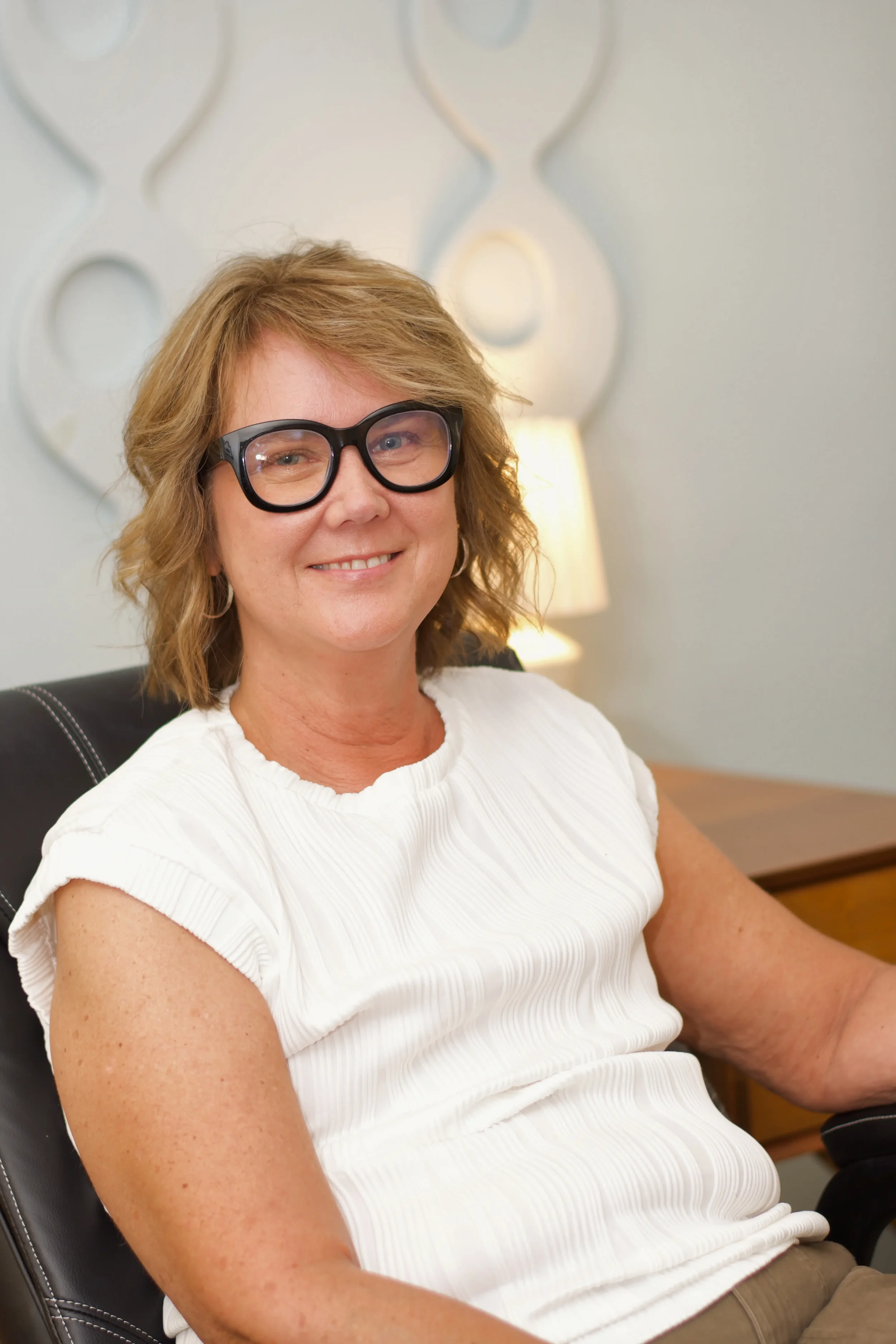
I’m Kathie
I am not your average therapist.
This is the work I was meant to do.
I’ve spent 10 years specializing in complex trauma, CPTSD, and dissociative disorders, including work with survivors of organized extreme abuse and mind control. I chose this specialty on purpose, and I stay in it because I believe this population deserves clinicians who truly understand the territory.
I’m direct, I swear sometimes, and I don’t do performative calm. I show up as a real person, which turns out to matter a lot when you’ve spent years around people who weren’t.
I hold an LMSW and I am certified in EMDR and Somatic Experiencing. I hold memberships with ISSTD, EMDRIA, and NASW.
I engage in regular consultation with other specialists in this field because this work deserves that live of care.

Specializing in…
-
Organized extreme abuse refers to abuse that is deliberate, repeated, and carried out by more than one person-often within a group, institution, or system. It may involve ritual elements, spiritual or religious coercion, mind control tactics, or programming designed to ensure secrecy.
People who have experienced OEA often find that no one around them names what was happening, and many have spent years wondering if what they lived through was real.
It was real. And it has a name.
-
Dissociative Identity Disorder is the mind’s most brilliant protective response to overwhelming, repeated trauma, particularly when it began in childhood. When experiences are too dangerous or too painful to be held by one sense of self, the mind creates separation.
The result is a system of distinct parts, each carrying different memories, emotions, roles, or ways of moving through the world.
DID is not a disorder of being broken. It is evidence of survival.
-
Complex PTSD develops when trauma is not a single event but a prolonged experience, often inescapable, often relational, often beginning early in life. It affects how you see yourself, how safe other people feel, how your body holds stress, and how hard it can be to trust your own perceptions.
CPTSD isn’t just “really bad PTSD”. It reshapes the nervous system, identity, and relationship to the world in ways that deserve their own understanding, and their own treatment approach.
The Approach
Our work is phase-based, which means we don’t begin by diving into traumatic memories. We start by helping your system find more ground beneath it. Safety first. Stabilization. Then, when you’re ready, we move forward together at a pace you control.
I draw from a range of trauma-focused therapies, designed for complex dissociative presentations including: EMDR, Theory of Structural Dissociation, Ego States, and Somatic approaches. What we use depends on you: your history, your system, and what we discover together about what actually helps.
There’s no one-size-fits-all here.
What You Can Expect
A space that stays steady no matter what you bring into it.
No flinching, no minimizing, no asking you to simplify what happened to make it easier for me to hear.
A real therapeutic relationship built on transparency, including about what I know, what I’m uncertain about, and what we’ll figure out together.
A Note on the Hard Stuff
Some of what my clients have experienced is extreme; ritual abuse, mind control, systems of organized harm. I name this here because if that’s part of your history, you deserve to know it won’t shock me. You won’t have to hold back or wonder if I can handle it. I can.
You survived. Now let's heal.
—
You survived. Now let's heal. —